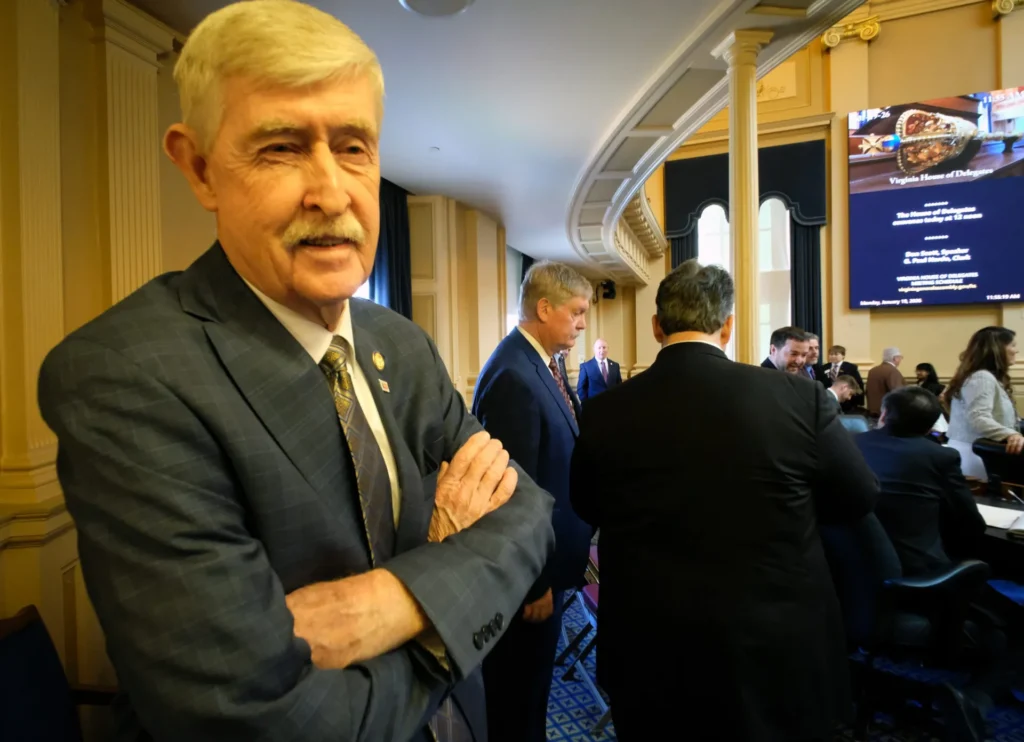
Among the proposals: A study of downtown Roanoke, a partnership between George Mason and Averett University and more work on the stinky Bristol landfill.
by Dwayne Yancey
January 26, 2026
Among the proposals: A study of downtown Roanoke, a partnership between George Mason and Averett University and more work on the stinky Bristol landfill.
This is a budget year, which means there are 140 state legislators who have 140 different opinions about what should be in the state’s two-year spending plan.
Under a quirk in Virginia’s budget cycle, the outgoing governor, Glenn Youngkin, prepared the budget and presented it about a month before he left office. Now legislators have finished introducing all their proposed amendments.
The next big step comes on Sunday, Feb. 22. That’s when the two money committees — House Appropriations and Senate Finance — release their proposed versions of what to do with all those amendments. Each chamber will vote on those Feb. 26. By tradition, each chamber then votes down what the other house has done and the budget goes to a select group of budget negotiators from each chamber to work out the final version.
This is where committee assignments matter. Legislators on a money committee are literally at the table where the budget is put together — which is why Del. Sam Rasoul, D-Roanoke, getting bounced from House Appropriations for reasons so far undisclosed is significant to the western part of the state. Most important of all are those final budget conferees, who get named anew each year but who in recent years have always included Del. Terry Austin, R-Botetourt County, and state Sen. Todd Pillion, R-Washington County. The new governor, Abigail Spanberger, will get her say, too, in the form of proposed amendments and line-item vetoes, but for now the attention is on the legislators.
Most of this budget work happens outside the public eye. All the proposed budget amendments are public, though, and they often give us a first look at some projects that might make their way into the final budget — and others that will not but at least signal some priorities from one particular legislator or region.
Some of the amendments are programmatic amendments — increasing pay for public safety workers, for instance, or returning Virginia to the Regional Greenhouse Gas Initiative. There are always requests to add certain building projects at public universities to the state’s capital construction list and lots of funding requests for infrastructure: water lines, sewer lines, roads. Likewise, there are always requests for small amounts of money for various local projects — a park here, a building there, or sometimes something else entirely. Del. Justin Pence, R-Shenandoah County, is asking for $200,000 so Page County can buy a dump truck.
I’ve gone through the proposed budget amendments by all 140 legislators. Here are some of the more interesting and/or important amendments, with emphasis on the legislators from Southwest and Southside, plus a few proposals from legislators elsewhere that would have an impact on the region. For a comprehensive list, you can look up all the budget amendments on the General Assembly’s website.
A regional public biomedical sciences high school in the Roanoke Valley
Seven years ago, Austin went to Houston to be treated for cancer (from which he’s recovered). While there, he was surprised to learn that many of the health care workers he came in contact with had gone to a high school that specialized in health careers: the DeBakey High School for Health Professions. He came back home cured, and with an idea. The result: He persuaded the General Assembly in 2020 to appropriate $700,000 for a pilot program in the Roanoke Valley to increase health sciences education in high schools as a way to create more “career pathways” into health fields.
The program is now up and running as the Blue Ridge Partnership for Health Science Careers. Austin has asked for an additional $500,000 for that program, but he’s also asked for something else: $100,000 “to conduct a feasibility study for the establishment of a regional public biomedical sciences high school, embedded in a K-16 education-to-employment pipeline, located on the Virginia Tech Carilion Riverside medical campus.”
Austin says that he’s been working with Carilion officials on the project and that a Carilion group recently went to Houston to tour facilities there. (Disclosure: Carilion is one of our donors but donors have no say in new decisions; see our policy.)